

History of kefir
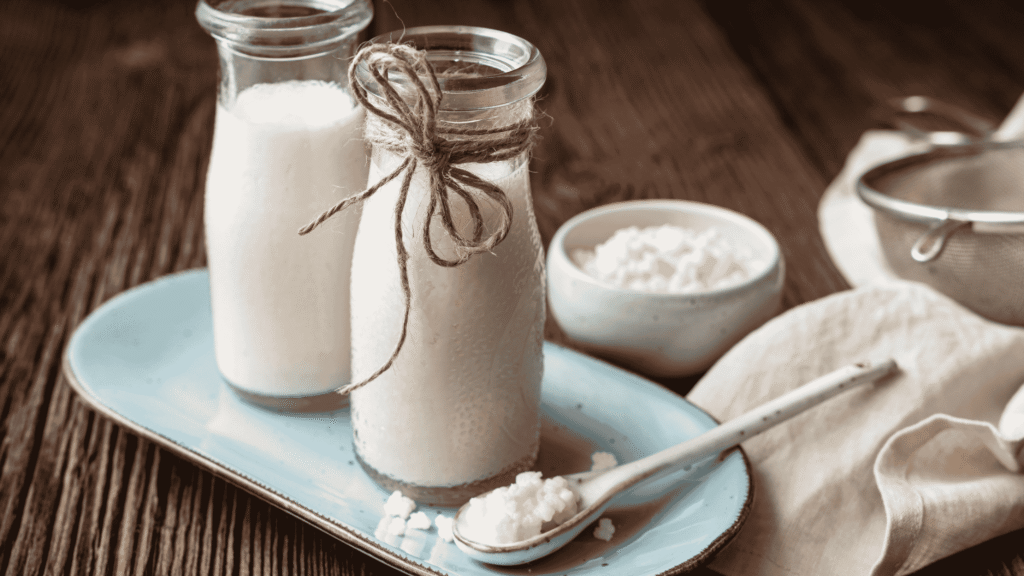
Kefir, A fermented milk product began as a refreshing drink on the northern slopes of the Caucasus Mountains. According to legend, Mohammad gave kefir grains to the Orthodox people, and ever since, they have guarded them carefully. Indeed, he strictly forbade them from revealing the secret of kefir preparation to outsiders. Otherwise, the grains would lose their magical power. Consequently, people kept the method hidden for centuries.
Traditionally, they made kefir in skin bags. Every day, they poured in fresh milk, and natural fermentation worked its quiet magic. Meanwhile, they hung the bag near the doorway, and with each arrival or departure, someone kicked or pushed it to stir the liquid. The practice was simple, but remarkably effective.
As a result, the finished kefir carried sharp acidity, along with varying amounts of alcohol and carbon dioxide. Today, however, producers often rely on a continuous method: they remove a portion of kefir and replace it with fresh milk. Over time, this process maintains the culture. Ultimately, modern technology allows kefir to flourish far beyond its mountain origins.
About Kefir
Kefir is a beverage produced by the action of lactic acid bacteria (LAB), yeasts, and
acetic acid bacteria on milk. This complex mixture of microorganisms produces a
distinctive fermented milk product with unique properties. Producers have used milk from cows, ewes, goats, and buffalo to make kefir, and they have sold it in Europe under a variety of names, including kephir, kiaphur, kefyr, képhir, kéfer, knapon, kepi, and kippe.
It is, at the same time, a functional food and a probiotic. There is growing evidence that the Kefir fermented milk product may indeed be helpful in many disease or infection conditions.
Kefir Grains
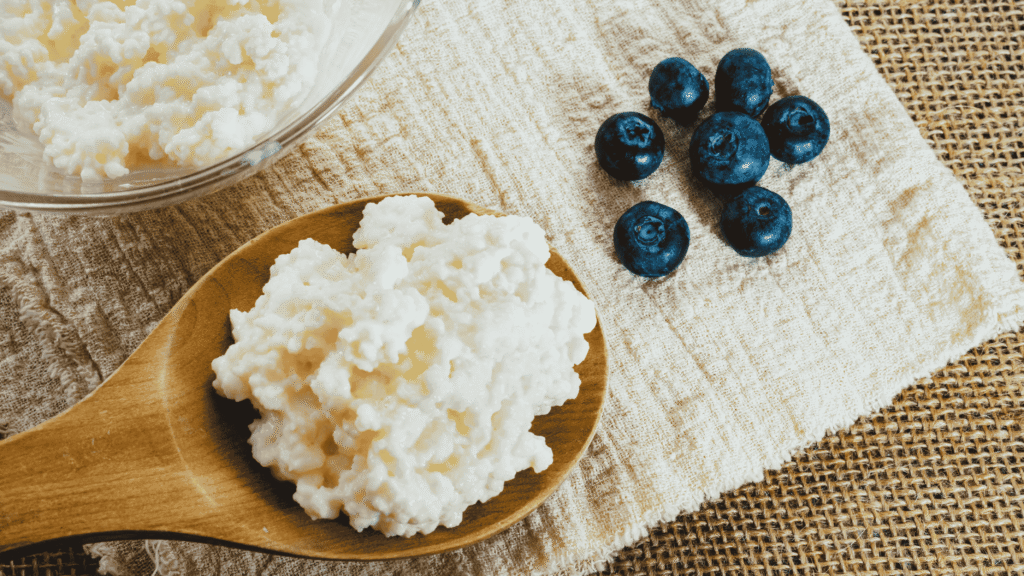
People produce kefir by adding either a starter culture called kefir grains directly to milk or by adding a percolate of the grains. Kefir grains consist of several different bacteria and yeasts embedded in a complex matrix of protein and carbohydrate. The microorganisms in the kefir grains ferment the milk, and people can recover the grains at the end of the fermentation process. Researchers describe the grains as elastic small florets, similar in shape to cauliflower, yellow or white in color, and 20 to 30 mm in size.
Production of Kefir
In home production, people do not rigidly control fermentation temperature and time. As a result, the final product does not inoculate new milk to produce kefir because the process disrupts the original balance of microorganisms in the grains. Therefore, producers must use kefir grains, which remain essential to the process.
Nowadays, many European countries commonly produce kefir on an industrial scale, and several countries have already patented processes that describe the method. Moreover, commercial producers follow different variations in the production protocol. Initially, producers used the set method to make kefir. In this procedure, they filled bottles with inoculated milk and fermented them at a controlled temperature until a strong coagulum formed. Finally, they cooled the product.
Traditional artisans begin kefir production by inoculating milk with 2 to 10% grains. Then, they allow fermentation to continue for about 24 hours, stopping once the mixture reaches a predetermined pH or develops the desired taste and texture. During this stage, they maintain the temperature at 20 to 25°C. Afterward, they often add a maturation step: the mixture rests at 8 to 10°C for 15 to 20 hours, which deepens the flavor. Once fermentation ends, artisans sieve out the grains. They either reuse them to start a new batch or preserve them in fresh milk for up to seven days. However, if they leave the grains in the final product, acidity rises too high and the flavor suffers.
The Taste of Kefir
The taste of unflavored kefir has been described as “yeasty,” and the terms “prickling”
and “sparkling” have been used to describe the mouthfeel of kefir caused by the
liberation of trapped CO2.
Nutritional Value of Kefir
Kefir, the fermented milk product, carries nearly the same protein, fat, and mineral content as the milk used to make it. As a result, it offers a naturally high nutritional value, particularly as a rich source of protein and calcium. Moreover, people praise kefir for its pleasant taste and smooth texture. In addition, its high digestibility enables individuals to consume large amounts with ease—without causing intestinal discomfort. Ultimately, kefir stands out not only as nourishing but also as gentle on the body.
Kefir as an Infant Food
A Russian research team studied premature infants, and their findings were striking. They discovered that when they fed the babies a mixture of kefir and Similac-type formula, the infants tolerated it well. More importantly, the babies gained adequate weight. In addition, the researchers noticed something fascinating: the blood fatty acid pattern in the infants mirrored the composition of the kefir–Similac mixture itself.
Kefir as a Probiotic
Researchers define a probiotic as a microbial preparation that contains live or dead cells, along with their metabolites, and that improves the microbial or enzymatic balance at mucosal surfaces or stimulates immune mechanisms. In contrast, kefir offers something more familiar: a complex mix of bacteria and yeasts. Surprisingly, however, scientists have not yet published studies proving that kefir microorganisms provide direct health benefits. Even so, the sheer number of microorganisms in kefir, often exceeding 10⁷ CFU per gram, allows experts to classify it as a probiotic.
