

We’re facing a monumental challenge: how to feed a global population hurtling towards 10 billion by 2050, all while navigating a changing climate and shrinking natural resources. Traditional farming methods, which have served us for millennia, are being pushed to their limits. Enter Agri-Tech.
It’s a term you’ve likely seen, but it’s more than just a buzzword for futuristic gadgets. Agricultural Technology, or “Agri-Tech,” is a broad industry that applies modern technology to every step of the food production process. The goal is simple and profound: to grow more food, more sustainably, and more efficiently.
This isn’t one single invention; it’s a collection of powerful new tools. Let’s break down the four key areas that make up this revolution.
1. Precision Agriculture: Doing More with Less
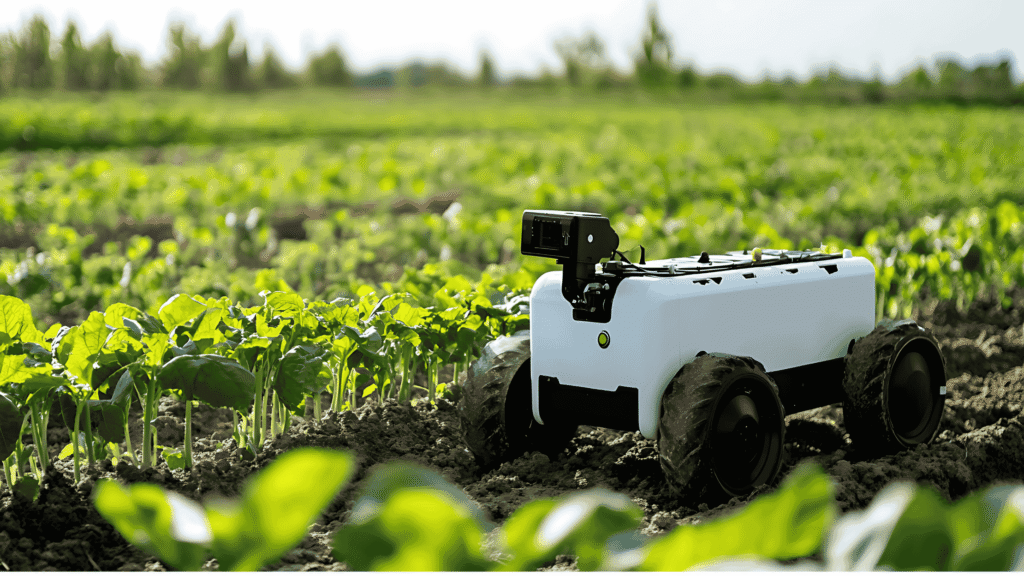
For most of farming history, a field was treated as a single unit. The same amount of water, fertilizer, and pesticide was applied everywhere. Precision agriculture, as the name suggests, shatters this one-size-fits-all approach.
By utilizing Agri-Tech tools such as IoT (Internet of Things) sensors, GPS-guided tractors, data-gathering drones, and AI, Agri-Tech enables farmers to understand their fields on a plant-by-plant basis.
- How it works: A drone scans a field and identifies a specific patch of soil that is low on nitrogen. That data is fed to a smart tractor that only applies fertilizer to that exact spot, reducing overall usage and saving money.
- The Impact: This data-driven approach is a game-changer. Industry reports show precision techniques can reduce water use by over 20% and, by optimizing application, significantly cut back on fertilizer runoff, which is a major environmental pollutant.
2. Controlled Environment Agriculture (CEA): Farming Goes Indoors
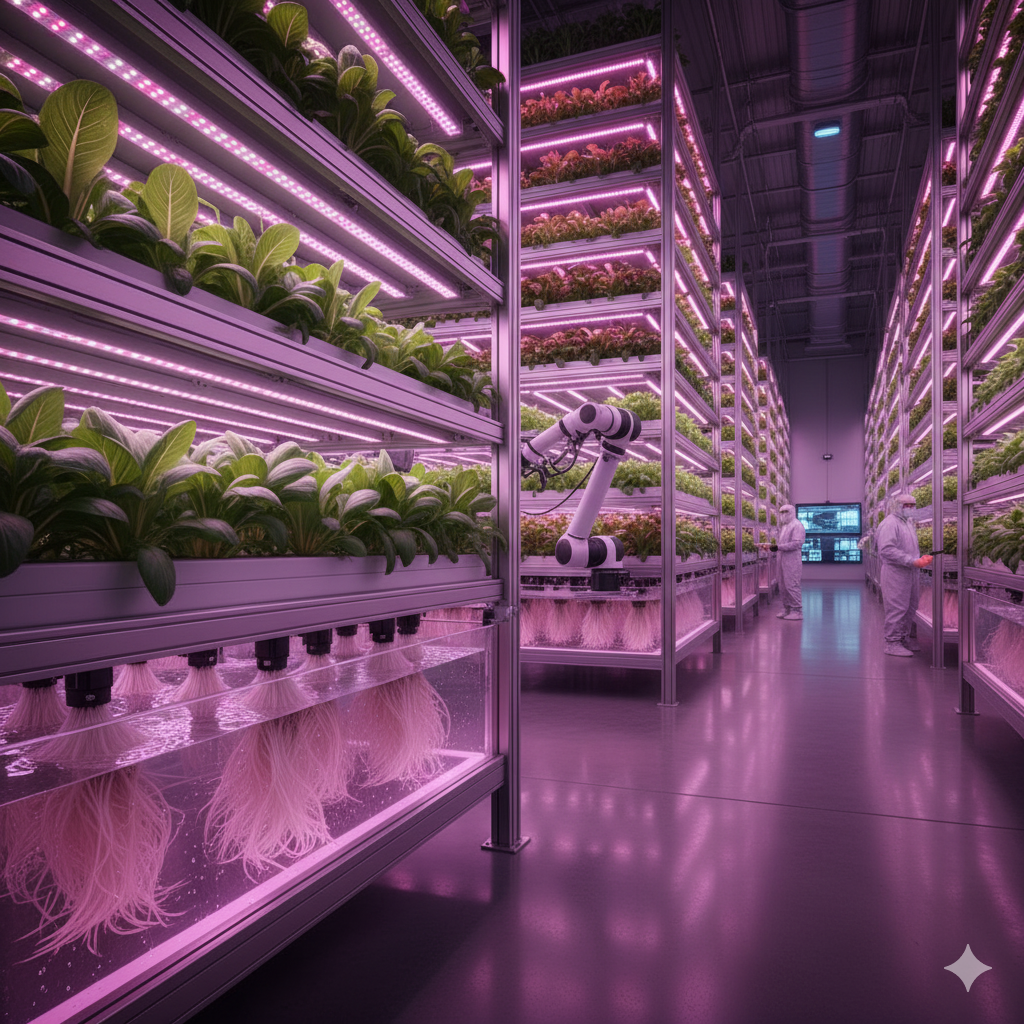
Why remain at the mercy of the weather, seasons, and soil quality? Controlled Environment Agriculture (CEA) moves farming indoors. The most prominent example of this is vertical farming.
These are high-tech(Agri-Tech) facilities that grow crops in vertically stacked layers, often in urban centers.
- How it works: Instead of soil, plants are grown in nutrient-rich water (hydroponics) or mist (aeroponics) under precisely calibrated LED lights. The entire environment—from temperature to humidity to CO2 levels—is optimized for growth.
- The Impact: The benefits are staggering. Vertical farms can produce crops year-round, use 90-95% less water than traditional field farming, and require zero pesticides. Because they’re in cities, they also slash transportation costs and carbon emissions, delivering fresher produce to consumers.
3. Biotechnology: Smarter, Stronger Plants

While often associated with ‘GMOs,’ modern biotechnology provides a far wider array of tools to develop hardier, more nutritious, and more sustainable crops.
- How it works: Scientists can use gene-editing techniques like CRISPR to make precise changes to a plant’s DNA. This isn’t about adding foreign genes; it’s about, for example, turning “off” a gene that makes a crop susceptible to a specific disease or “on” a gene that helps it survive a drought.
- The Impact: This leads to crops that are resistant to pests and blights, require less water, and can even be fortified with extra vitamins to improve nutrition. It also extends to the soil itself, with new “probiotics for plants” that use beneficial microbes to boost growth.
4. Sustainable Inputs: Beyond Synthetic Chemicals
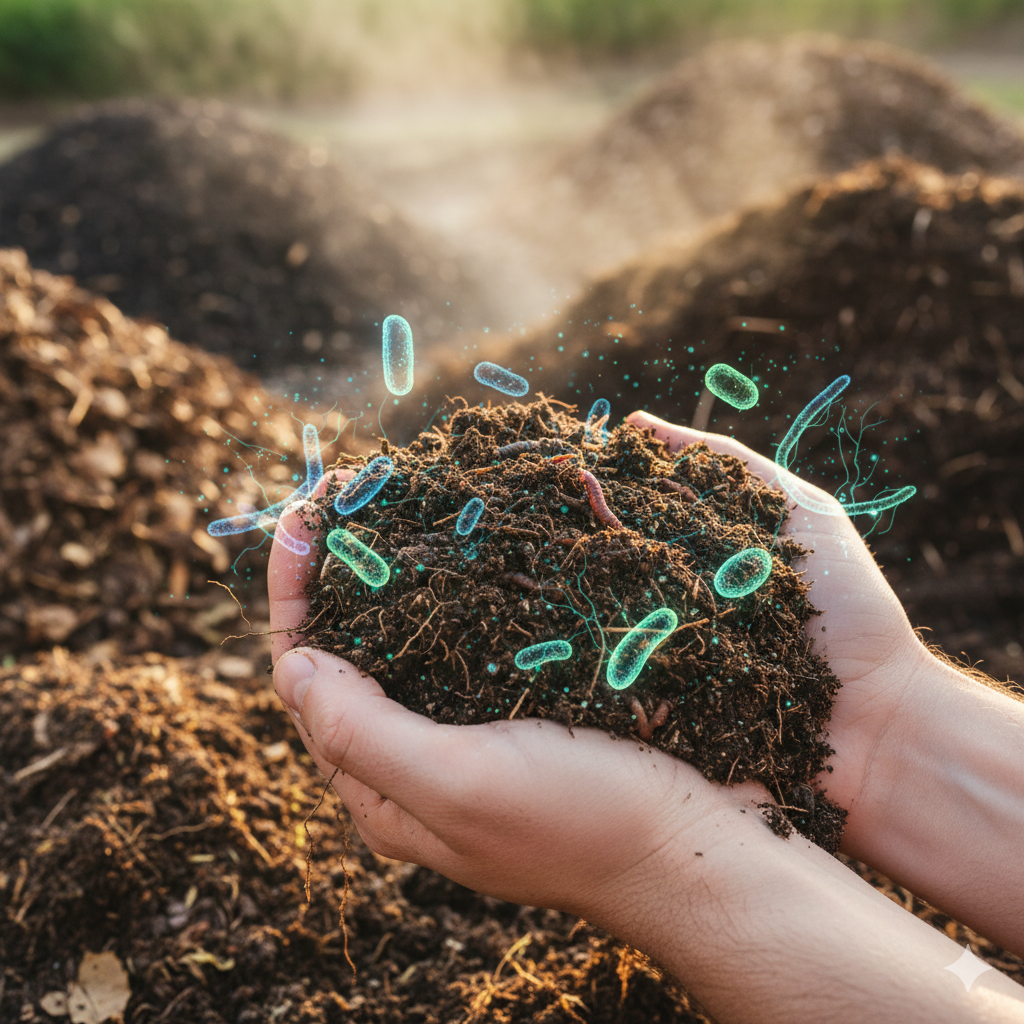
For the last 70 years, farming has relied heavily on synthetic fertilizers and pesticides. While effective, they have a high environmental cost, from soil degradation to water pollution. The new generation of “sustainable inputs” provides natural alternatives.
- How it works: This category includes bio-fertilizers, which use living microorganisms to feed plants, and bio-pesticides, which are derived from natural materials (like plants or bacteria) to manage pests. It even includes sustainable animal feed, like using protein-rich insects or algae.
- The Impact: These inputs work with nature, not against it. They help rebuild soil health, protect vital pollinators, and reduce the carbon footprint of farming, creating a truly regenerative cycle.
The Farm of the Future is Here
Agri-Tech is not a far-off dream. It’s a series of practical solutions being deployed on farms around the world today. It’s the smart sensor in the soil, the vertical farm in the city, the drought-resistant seed, and the microbial fertilizer.
Together, these technologies form the foundation of a new agricultural model—one that is not just resilient and productive, but truly sustainable enough to feed our future.